
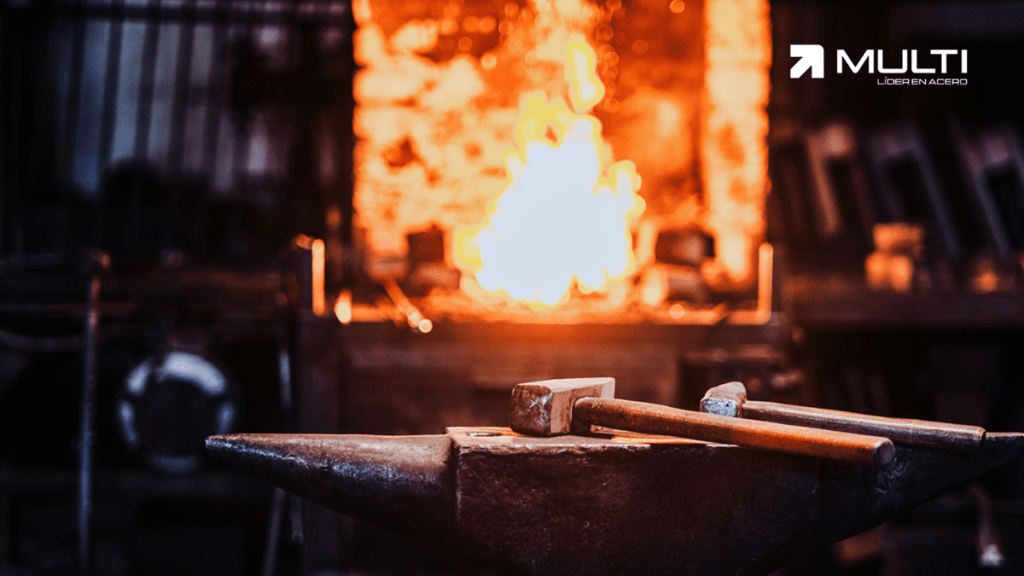
Ever since humans discovered how to shape metal, blacksmithing has been fundamental to construction and design. First, it was bronze, but with the arrival of the Iron Age, this craft evolved, allowing for the manufacture of more durable tools, weapons, and structures. Over time, decorative forging became an artistic expression applied to architecture, creating iconic elements that remain relevant today.
Today, decorative ironwork remains a mainstay of architectural design, combining strength and aesthetics. At MULTI, we are experts in steel solutions that integrate tradition and innovation, with the best steel options in the region, ideal for those seeking quality and durability in their projects.
History of blacksmithing: from the Iron Age to decorative forging
Blacksmithing has a history of more than 3,000 years. Its origins date back to the Iron Age (1600 BC), when the Hittites discovered how to work this metal with coal, creating pieces that were more resistant than bronze. This advancement marked the beginning of a transformation in construction and toolmaking.
Later, decorative forging took center stage in architecture, with ornamental designs embellishing palaces, churches, and large structures. During the Industrial Revolution, mass production threatened the traditional craft of blacksmiths, but customization and artistic design allowed decorative ironwork to evolve over time.
Today, decorative wrought iron remains an essential part of architecture, integrating new technologies and modern materials that expand its applications and possibilities.
Decorative forging and ironwork in modern architecture
Today, decorative ironwork is used in a variety of architectural applications. Its versatility allows for the creation of pieces that provide both functionality and design. At MULTI, we have developed the Decoforja line, which offers a wide range of steel solutions in Guatemala and the region, perfect for residential, commercial, and industrial projects.
Our Decoforja line includes:
- Bars
- Inserts
- Accessories such as leaves, flowers, rosettes, curls
- Spheres etc.
Each Decoforja piece meets the highest quality standards, ensuring strength and durability for any type of project.
Decotubo: the evolution of ironwork in modern structures
In addition to decorative ironwork, modern architecture demands high-performance structures with sophisticated aesthetics. That's why, at MULTI, we developed Decotubo, a line of steel tubing that combines functionality and design in architectural applications.
With Decotubo, we offer steel solutions for:
- Railings and fences with stylish and durable finishes.
- Pergolas and metal structures, providing an elegant and functional design.
- Partitions for semi-interior spaces, to provide decorative elements.
Each Decotubo piece has been designed to meet the demands of designers, blacksmiths, and project integrators. Blacksmithing has evolved throughout history, adapting to the needs of each era without losing its essence. Decorative forging remains an unparalleled option in architecture, providing beauty and durability in every detail. At MULTI, we keep this legacy alive with Decoforja and Decotubo, two product lines designed for those seeking innovation and quality in steel solutions.
If you want to integrate decorative ironwork into your next project, in MULTI We have the best steel options in Guatemala and the region. Contact us and discover how we can take your design to the next level with the power of steel.


