
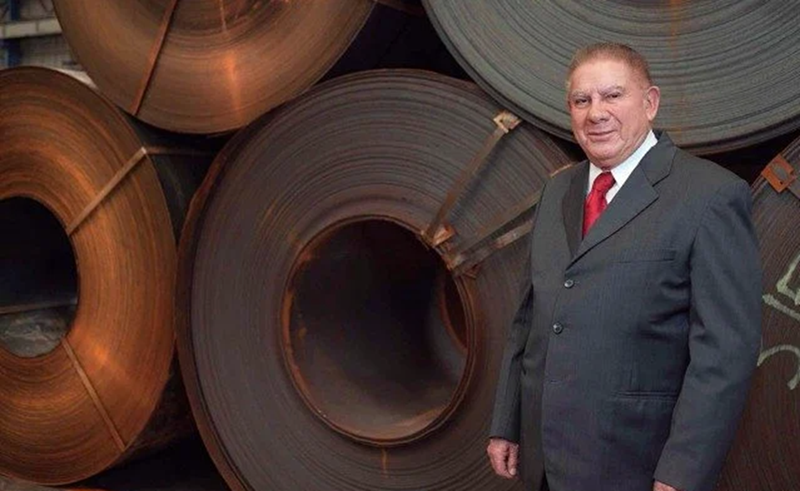
It's one of the main suppliers of steel products in Central America, and the recent energy reform in Mexico offers new growth opportunities. This steel entrepreneur is now looking south.
On June 30th, Paseo Cayalá, a small city within the larger city of Guatemala City, welcomed a new tenant: MultiGroup International, another Isthmus giant, but one specializing in steel products. Domingo Lima, founder of the business corporation, and Domingo Lima Díaz, his 32-year-old grandson and international director, addressed the approximately 30 guests at the opening.
The president of MultiGroup was succinct: "This place marks the beginning of a new era for the group." His grandson, with the energy of a young man eager to take on the world and a degree in project management from Boston University, elaborated further: "We have very aggressive dreams of expanding regionally. Every screen you see at the top of this office will reflect our growth. We're a five-star team like Barça (Barcelona Club), we have excellent goalkeepers, defenders, and forwards. The future is out there waiting for us." The context seems ideal for venturing into new markets.
Although the steel imported by MultiGroup comes largely from Japan and Korea, the 800 million tons produced annually by China have driven prices down to almost half of last year's prices—from $500 to $290 per ton—generating a significant profit margin for end manufacturers. "Forgive me for contradicting you, son. You say we have a team like Barcelona to conquer other markets; I say it's like Real Madrid," Domingo Lima told his grandson at the conclusion of the welcoming address at his new international trade offices in Cayalá, a city where priority was given to domestic suppliers in its construction, with MultiGroup being one of the largest.
Solid structure
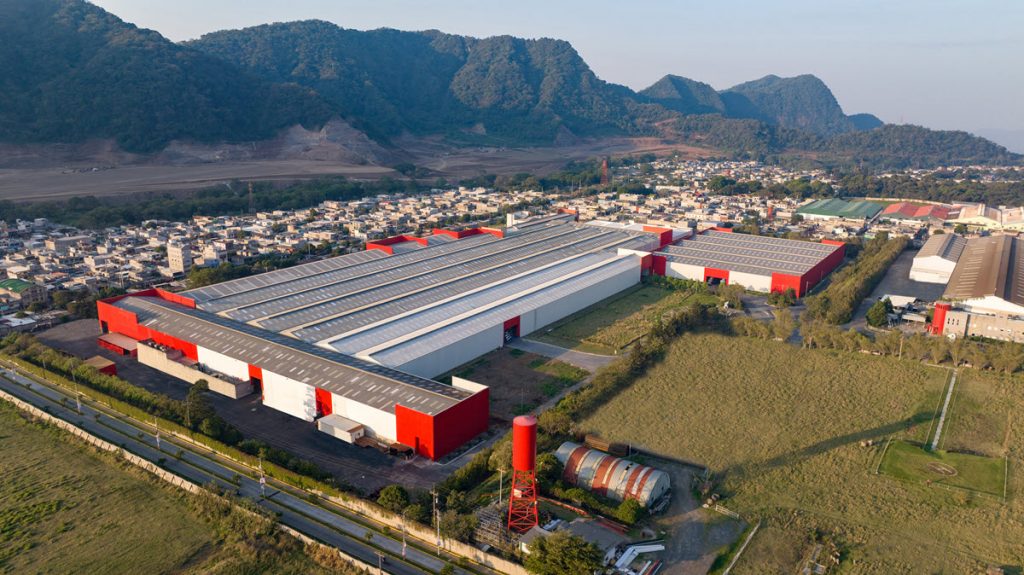
At MegaPlanta Multigroup, located in Palín Escuintla, where industrial and structural profiles are manufactured, two statues of medieval knights stand out, giving the impression that they are engaged in battle. One of them is about to culminate, as he holds his opponent on the ground with a lance pointed at his chest. Each statue is approximately 10 meters tall and wears steel armor. The idea for displaying the colossi there arose during a trip the Limas took to Verona, Italy, where they came across similar effigies.
Statues are very representative for Domingo Lima, as they remind him, he says, of the constant competition in business and encourage him to be vigilant in order to react skillfully in the markets where his firm operates. It is precisely this ability to react that is why the founder of MultiGroup defines himself as "not a planner," but rather as someone with the ability to seize the opportunities life presents.
Like when, at the request of his wife, who had trained as a teacher, he went to the Minister of Education without knowing him and waited outside his office to tell him she needed a teaching position, and he got it. Or when, needing warehouses to store steel, Domingo Lima investigated the birthday of a woman in Zone 3 of Guatemala City who owned a large tract of land. He arrived on her birthday with a cake and mariachi music and took her to celebrate. "I told her: 'Look, you know I need to use the land. If you leave in a month, I'll give you 50,000 quetzales; if you leave in two months, 30,000; if you leave in three months, 10,000.' After 15 days, she left with her family." Now there are five wineries in Zone 3. Another example is when in his youth he went to New Orleans without money or work and stood in front of a Caterpillar store and "a two-meter-tall gringo came out and said to me: 'What are we going to sell you?' I replied: 'I don’t speak english’ He said, ‘So, what do you do?’ I told him, ‘Nothing.’ And I left with catalogs for Guatemala and credit to sell products.”
It was upon his return to his home country that the founder of MultiGroup started a business called Refaccionaria Americana. One of his first clients was the National Electrification Institute (INDE). This business would unwittingly lead him to discover the vocation that has allowed him to conquer other Latin American markets: the sale of steel products. “INDE's purchasing manager asked me why I didn't sell him wood for light poles, but I went with an engineer friend to ask him what I could use instead of wood, and he suggested metal,” says Domingo Lima. INDE used to purchase steel for 3,000 quetzales a day until the entrepreneur ran out of the input and returned to New Orleans, this time to buy large quantities of steel from none other than American Steel. This was the commercial network that allowed him to grow in Guatemala, until a Korean man approached him offering a ton of steel at half price.
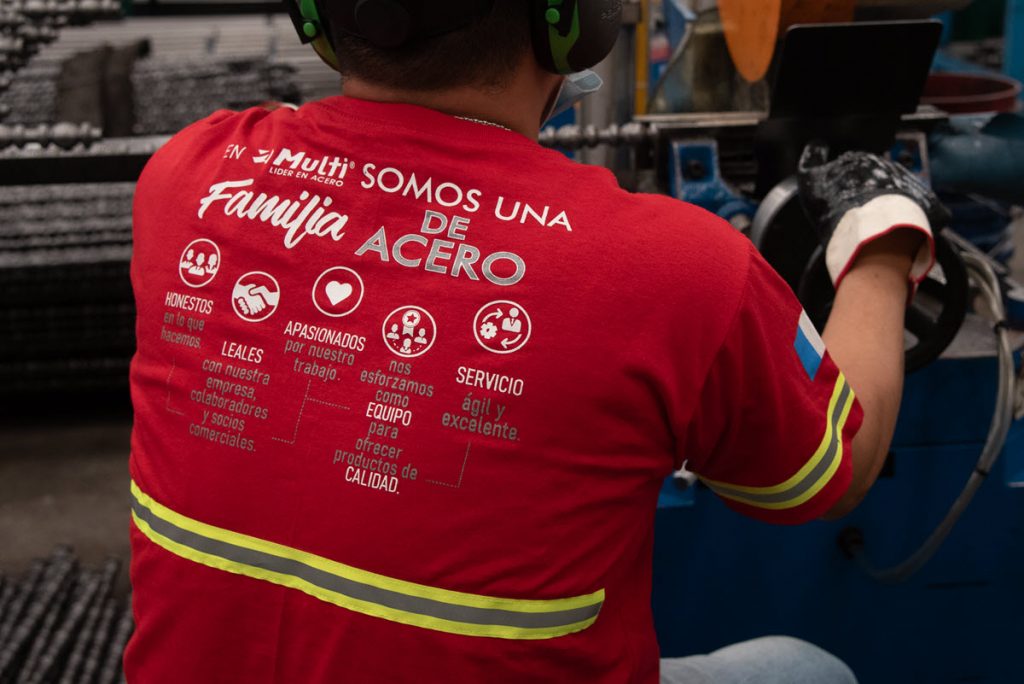
From then on, growth was rapid. When Domingo Lima's company began manufacturing steel products, it had just 30 employees. It currently has 950, and by the end of September, MultiGroup executives expect to reach 1,000 employees across the four plants they operate.
Fly over challenges
Domingo Lima is 80 years old and remains as bold as he was in his youth. When he needs to travel to one of his manufacturing plants in Guatemala, Domingo Lima takes a tour of his red R66 Turbine helicopter, takes off his jacket, rolls up his shirtsleeves, adjusts his brown cap so the sun doesn't burn him, and puts on his aviation headset before sitting next to the pilot, from where he observes every detail of what lies below. Just as when he flies over Guatemala, the businessman likes to have a panoramic view of the business opportunities emerging in Latin America. Mainly where the telecommunications or energy industries require towers, the furniture sector requires chair structures, the sugar industry requires steel infrastructure, or construction and manufacturing require large quantities of materials.
One of these countries is Mexico, where Domingo Lima's firm has been supplying Pemex with special pipes for the oil sector for several years, but the recent reform approved in the Aztec country - which opens the exploration and exploitation of oil wells to private investment - could trigger a greater participation in this market for the Guatemalan firm in the future, as well as the network of gas pipelines that the government is weaving for the following years (such as the gas pipeline that is planned to go from Mexico to Honduras, passing through Guatemala). “We are present in 12 countries and believe we can grow even further in Mexico, Costa Rica, Belize, the United States, the Dominican Republic, and Cuba,” says Domingo Lima.
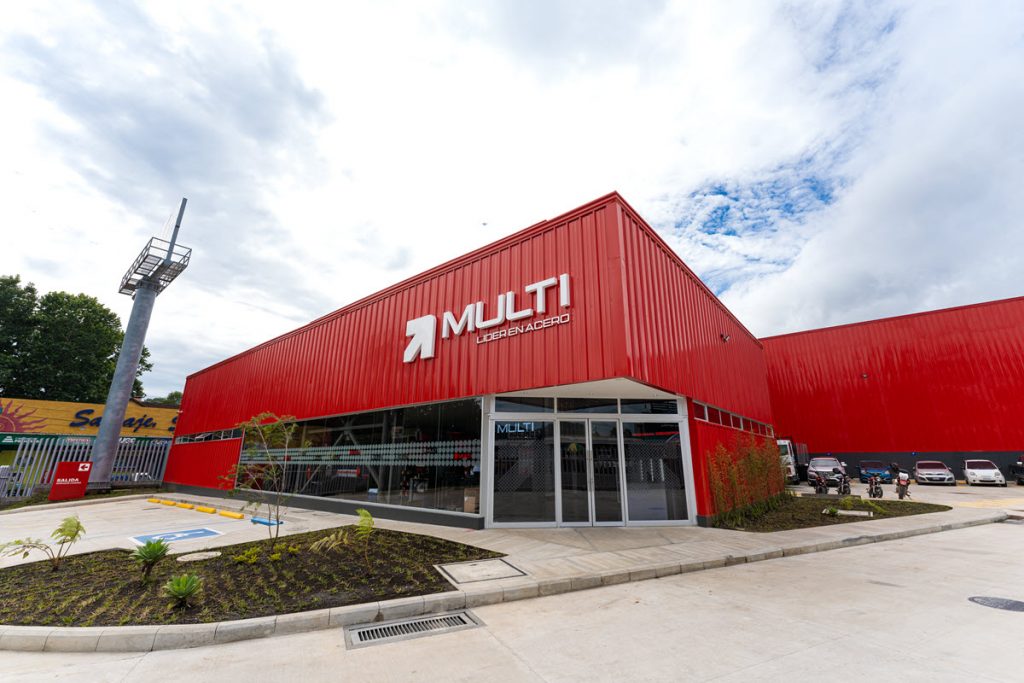
Other countries where the Guatemalan company has a presence are Puerto Rico and Panama. It began formal operations with clients on the Caribbean island this year, thanks to the signing of several trade agreements. It also has a subsidiary in the Central American country that supplies other manufacturers with raw materials rather than finished products. "We find the Colombian market interesting due to its consumption levels, but we're also interested in the growth shown in Peru and Bolivia for future ventures," says the founder of MultiGroup.
In this process of expanding to other parts of the continent, Domingo Lima is not alone. He is accompanied by a younger generation with a modern understanding of global business. “When this man (his grandson Domingo Lima Díaz) came in, he revolutionized everything. All the grandchildren are already involved in the business and have studied in Chile, Boston, London, Shanghai, and even Dubai. My granddaughter is a lawyer and works in the finance department.” This vision, based on the generation that came before her, leads the young international director to believe that one of the main challenges in this expansion phase is strengthening human resources. “Our plants already have an incentive plan as if the teams that comprise them were in Formula 1,” he asserts. The Formula 1 that the executives of this family business refer to not only seems to be at the best moment to enter thepitsto restructure the international strategy, but the competitive path is unbeatable, considering that, according to Domingo Lima himself, decades ago the steel products manufacturer earned more profits and in recent years these have decreased, but in current conditions this could change.
And if there are winners from the current low price of steel, it's the companies that use this input in their production processes, analysts agree. "And no short-term changes are seen in this situation as long as China continues to weaken and the dollar remains strong," considers Óscar Jasaui of Pacific Credit Rating. Even if demand increases, there is idle capacity worldwide (close to 30%) that would allow for more steel production without impacting prices in the short term, adds Dario Epstein, president of Research for Traders. This does not take into account the unfair steel trade that reaches Guatemala from China and puts 1,200 jobs at risk in Central America, according to Alacero—data from the agency indicate that in 2014 alone, imports of finished steel into Guatemala increased by almost 50%. Beyond the expected future performance of this commodity, there is something that fills the president of MultiGroup with pride today: "being a family business that demonstrates that it is possible to be as competitive as the largest and stand out in the region," says Domingo Lima.

